A sandbox game set in the north woods

THOLE

Build a home in the north woods with your friends, in one shared world where what you do stays done. Clear the land, raise a cabin the way you want it, dig a canal and watch the lake run into it, and get the woodpile in before the snow. The year turns here, and your place is still standing when spring comes.

16 kmof woods, lakes and sea13skills4seasons1shared worldNo download
Day 3in the north woodsSpring. Planting weatherNobody out right now

The LanternRead the paper

  • Day 2First copper ore out of the ground
  • Day 2First log rack built in these woods
  • Day 2First coal out of the ground
  • Day 1A new settler in the woods
  • Day 1A new settler in the woods

News is printed a little after it happens, so it never gives away where anyone is.

SettlersEveryone

Total level is every skill's level added up. Each settler's page has the rest.

At the stallsHow prices work

  • Breada rough guide until it sells5 gold
  • Baked potatoa rough guide until it sells4 gold
  • Grilled fisha rough guide until it sells3 gold
  • Fish chowdera rough guide until it sells10 gold
  • Cooked meata rough guide until it sells6 gold
  • Meat stewa rough guide until it sells12 gold

Nothing has sold often enough yet to have a going rate, so these are rough guides for food. Settlers set their own prices, and gold only ever comes out of the ground.

Who it's forThe game I wanted to play

If you've ever wanted an online world where you dig and build the land itself, where the work takes real time without taking over your life, and where the place actually changes when you do something in it, then I made this with you in mind.

I couldn't find a game that did all of that, so I started making one. The idea is simple. You come back to a fire at night, your friends log in and see the dam you built that afternoon, and it's all still there next week. There's no match that ends and no season that wipes everything so people can start over.

Shaping the land itself, digging, banking and building, with the grind kept to a sensible level.
Skills that keep opening up, with something new to reach every couple of levels.
Dark nights, a real winter and a warm stove, the kind of game you settle into after supper.
Neighbours who look out for each other, selling at stalls, sharing a woodpile and talking out loud by the fire.

Why I'm making itFour friends and an empty lakeshore

When I wrote down what this game had to be, I kept coming back to one picture. A few friends spend a handful of evenings turning an empty lakeshore into a little settlement. There are cabins they designed themselves, a field they cleared, a canal they dug that boats now use, a woodpile they all chipped in on, and a story about the night the wolves came.

Most of how Thole works comes back to that. The work takes real time so the cabin means something when it's done. The nights are dark so the fire matters. The world doesn't get wiped, because your place should still be there next week, and next year. And it runs in a browser on your phone or your computer, because the friend you want to bring along shouldn't have to install anything to come out to the fire.

Joe
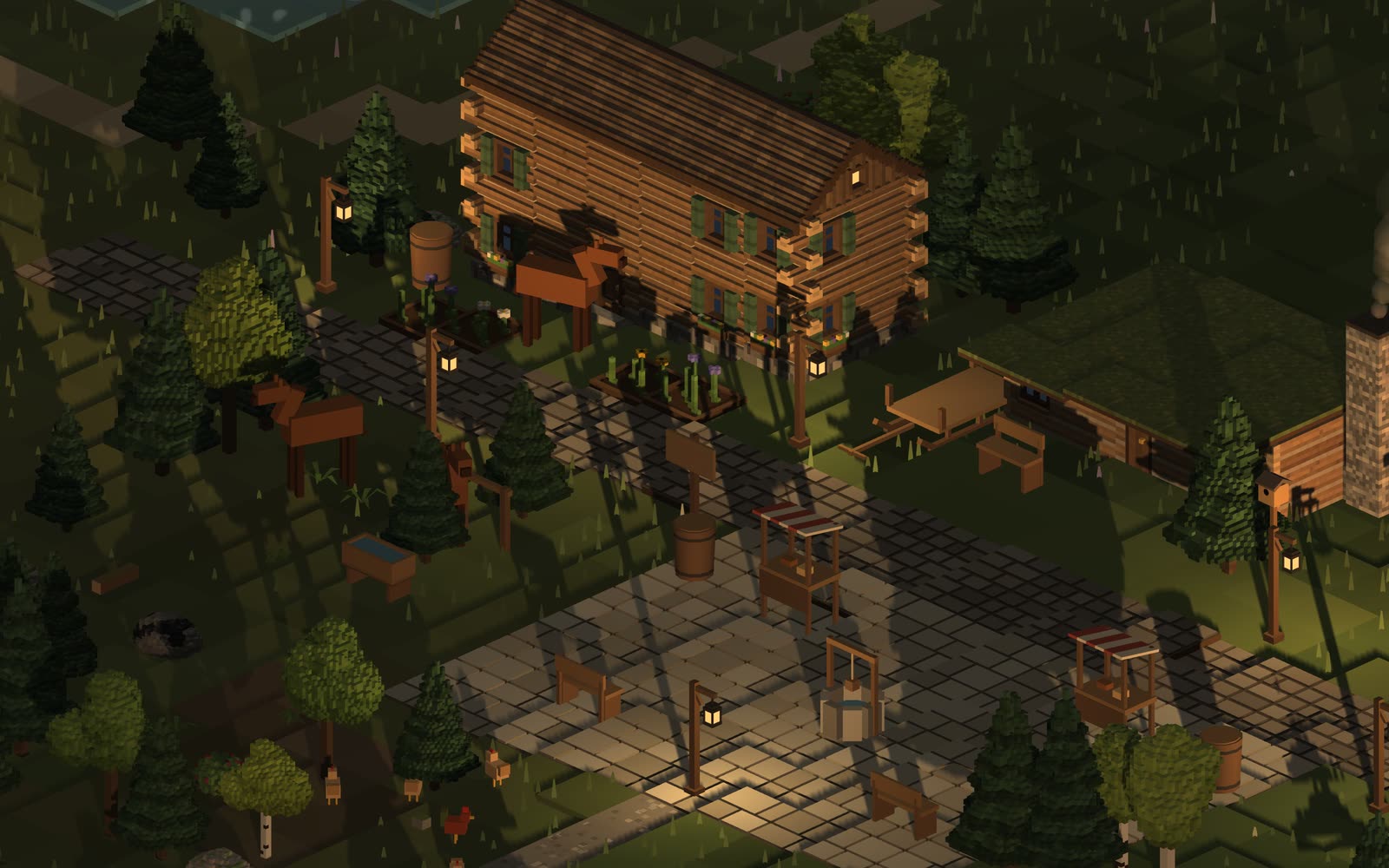
The street and the square at dusk, the lamps lit and neighbours still out

The worldWhat's out past the firelight

Thole is sixteen kilometres across, which is a lot of country, and most of it nobody has walked yet. You start at a camp fire between two lakes, and from there it's spruce and pine and birch, long ridges of granite, rivers that wind down to the sea, open meadows, and a coastline with islands you can only get to by boat.

A day runs ninety minutes and the nights are properly dark. A year runs four weeks of real time, through spring, summer, autumn and winter, and everyone sees the same season and the same sky. Rain comes through and burns an open fire down faster, and now and then a thunderstorm rolls over. In autumn the birches turn and the leaves come down. In winter the snow lies on the roofs and the pines, the lakes freeze over, and the nights get long.

The woods have animals in them, and some of them have teeth. Wolves run in packs and get bold after dark, bears keep to the deep woods until they den up for the winter, a bull moose in the autumn rut will charge you, and boar root about in the hardwoods. Deer, hares, foxes, beavers and wild horses are all out there too. Nothing hunts close to the camp, so a newcomer has somewhere safe to find their feet.

You can swim out into deep water, though it wears you out fast, and anyone on the bank can pull a tired swimmer in. Steep ground is a climb, and a sheer rock face is no place to run out of breath.

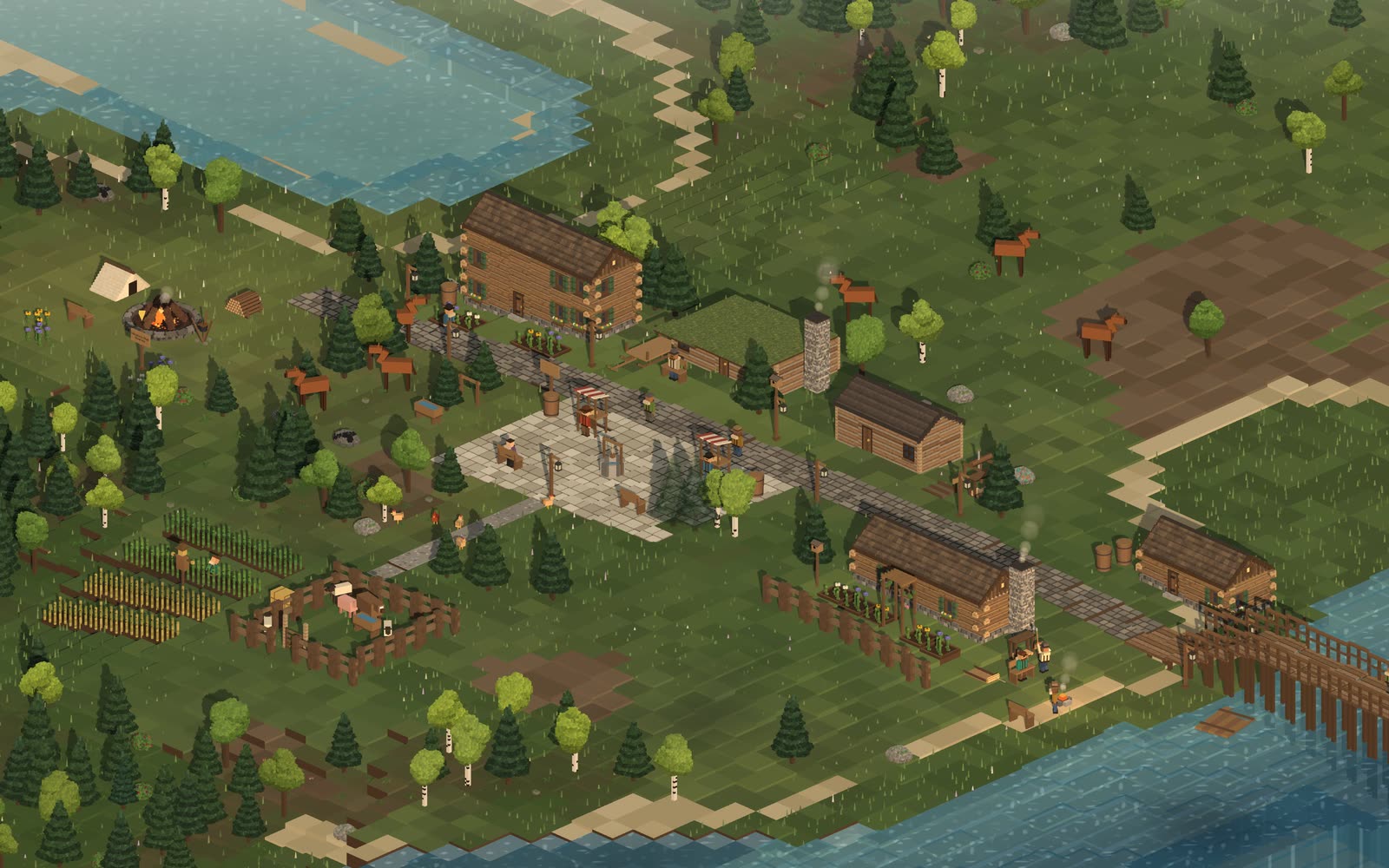
A small settlement from high up in the late afternoon, tucked into the woods between two lakes: the camp fire, a cobbled street, the square, houses, a farm and a pier

The lakes

The camp, the fishing, and flat land to clear for your first cabin.

The rivers

Running water to cross or bridge, and a way through the country by boat.

The meadows

Open land for fields and grazing, and where the wild horses run.

The deep woods

Timber and deer by day. At night it's no place to be without a light.

The hills

Stone and ore, and the best place to start a mine.

Underground

Tunnel into a hillside or sink a shaft. Caves wait in the limestone and the sea cliffs.

The coast

Sea fishing, wrecks on the sand, and salt water to sail.

The islands

Out across open water. Hold a heading in a sailboat and you'll get there.

There are places worth finding out there too, and I'm not going to tell you where. Find a landmark and the Lantern prints your name with it, and it goes on the Atlas for everyone.

A cave in the hillsideOld stone foundationsA shipwreckA hot springAn abandoned mineA giant pineStanding stonesAn eagle's nest

Some finds don't go on any map: rich seams, gold in the creek gravel, fossil beds, and a cairn somebody meant to come back to. Whoever finds one of those can keep it to themselves.

What you do out thereWhat's in the woods right now

There are no quests telling you where to go and no tracker telling you what's next. You decide what your place looks like, what you're good at and how you make a living. Here's what's in the game today, and why I built each part the way I did.

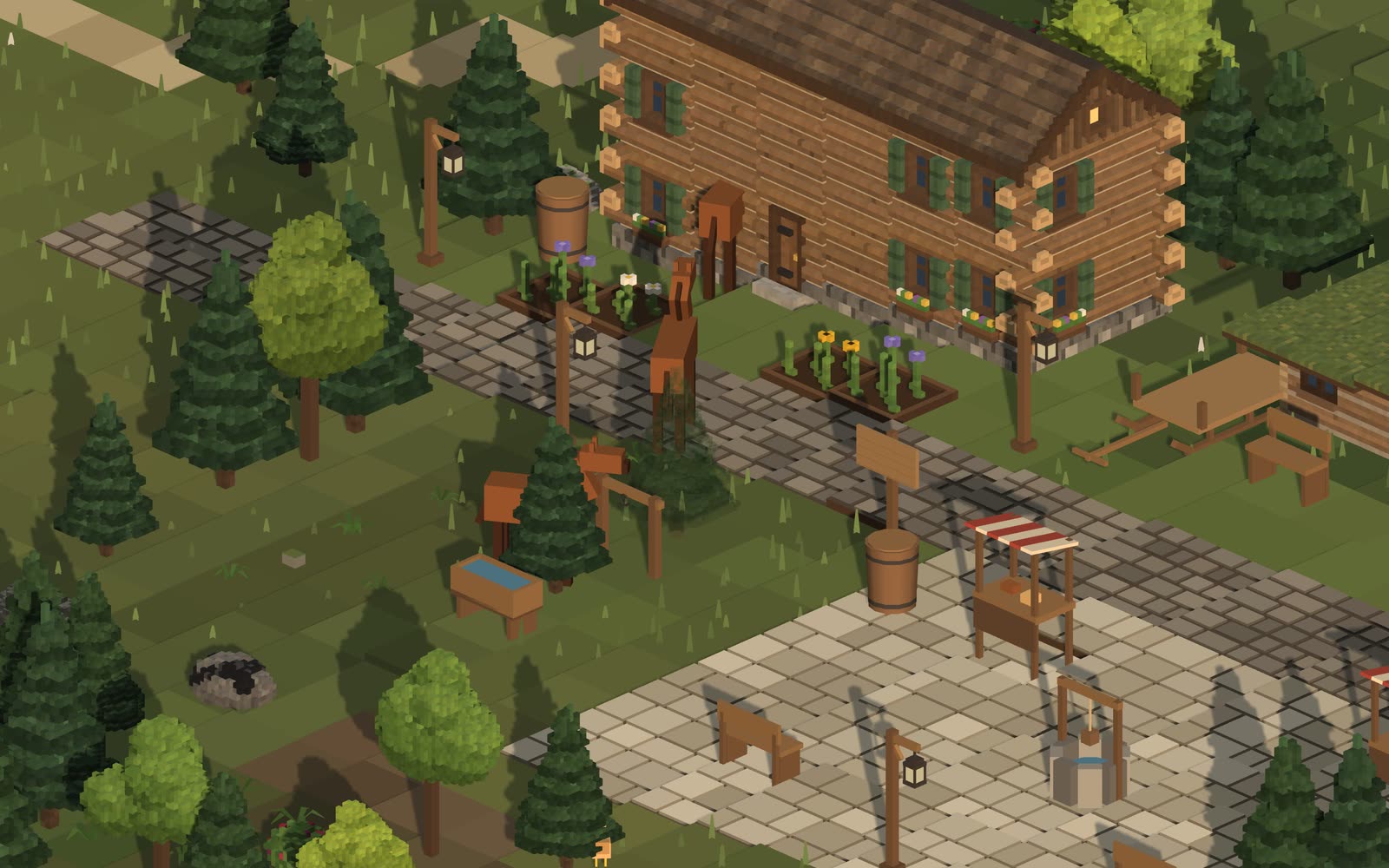
A finished two-storey log house with green shutters and flower beds out front, across the street from the market square, in the late afternoon

Build your cabin, any shape you like

There are no blueprints. You lay down floors, walls, windows, doors, gables and roofs piece by piece, up to three storeys, then fill it with furniture, pave a path to the door and plant flowers out front. Every house starts as plain logs. When you have the planks you can finish it: round logs on a stone footing, crossed corners, shutters and flower boxes, and a cedar shake roof.

WhyA blueprint gives everyone the same house. I wanted you to be able to walk past a cabin and know whose it is by the look of it, and finishing one should be worth the work. A finished house holds the heat, so the stove burns less wood all winter.

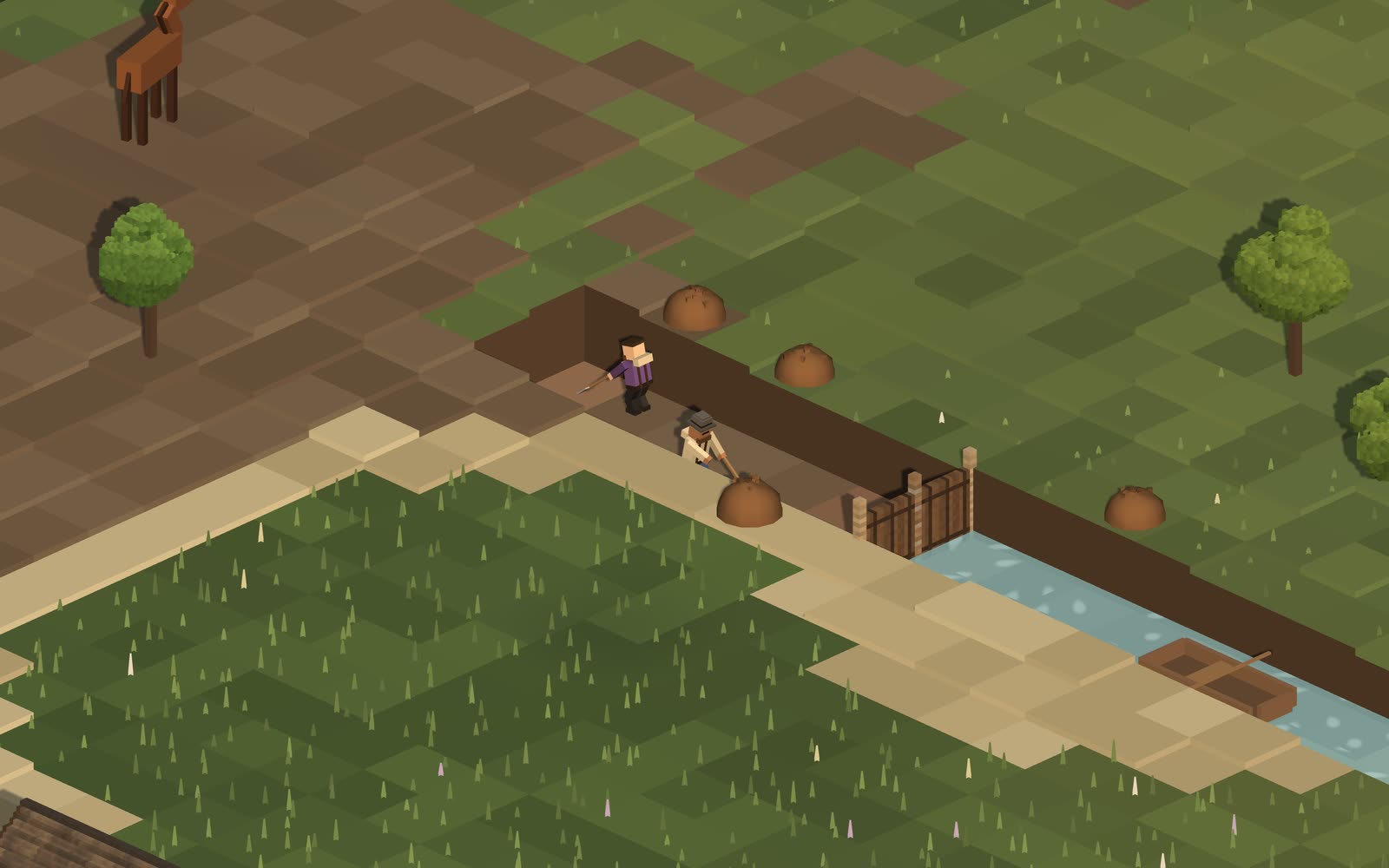
Two settlers digging a canal off the lake, a water gate holding the water back from the dry end, spoil heaped on the bank and a rowboat in the cut

Dig the land and the water follows

Every bit of dirt, clay and sand you dig comes out as something you carry, and you can only raise ground by hauling material there. Dig a trench down to the lake and the water runs in and fills it. Bank the dirt back up, or build a log wall, and you have a dam. Put in a water gate and you can open and shut it.

WhyThis was the first thing I built, before anything else. If you can't change the land for real, it isn't really your land.

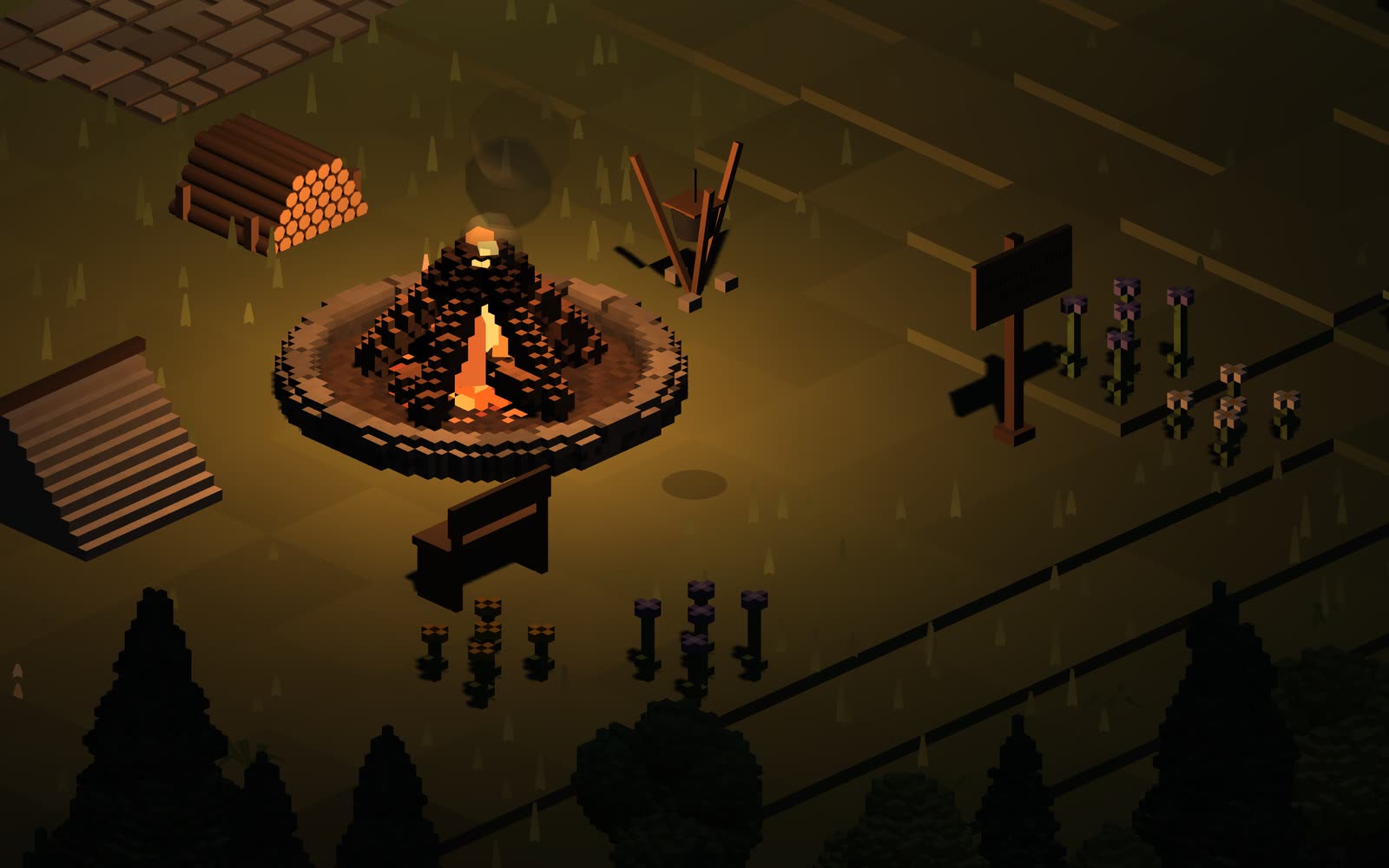
Settlers round the camp fire after dark, the woodpile and the lean-to lit by the flames

Keep the fire going

When the sun goes down it gets properly dark. The evening chill wears on you, and that's when the wolves come in close. A campfire or a lantern is the difference between a good night and a long walk back. A fire shows you how it's doing, too: it sinks to embers when it wants a log and sputters in the rain. If you do go down, what you were carrying stays where you fell, and only you and the people you trust can pick it up.

WhyMost games give you light for free. Here a fire is something you need, so the evenings around it with your friends mean something.

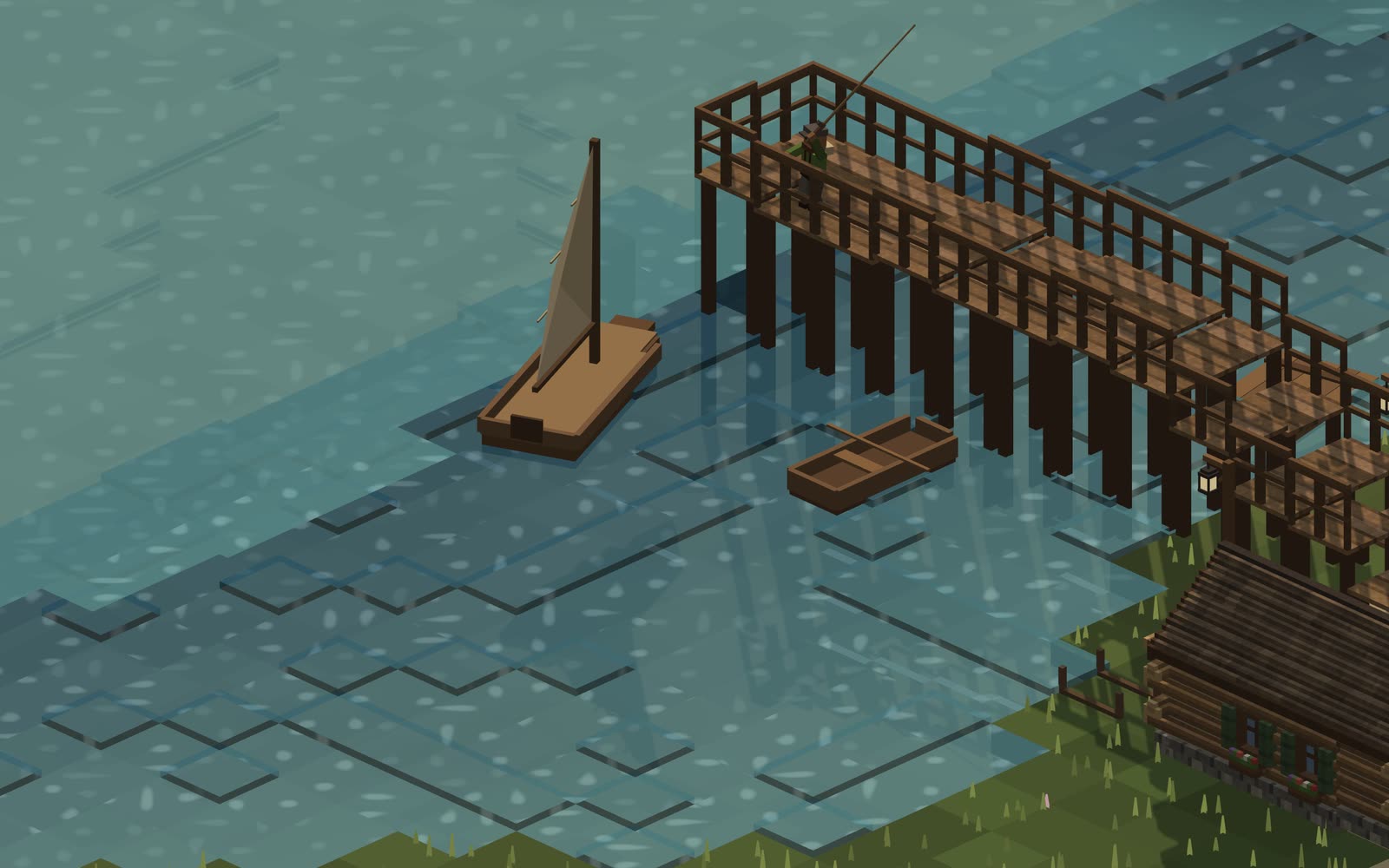
A pier on log pilings with someone fishing off the end, a sailboat and a rowboat alongside, and a boathouse on the shore

Horses, carts, wagons and boats

Wild horses graze on the open grass. Bring carrots and a halter and keep at it until one lets you put it on. Then ride it, gallop it, or hitch it to a wagon that hauls fifteen hundred kilos. On the water you go from a raft to a rowboat to a sailboat that'll take you out to the islands. Give them names, and everyone sees them as yours.

WhyThere's no fast travel on purpose. Everything heavy has to be hauled, so a good wagon and a road you built yourself really change how you play.

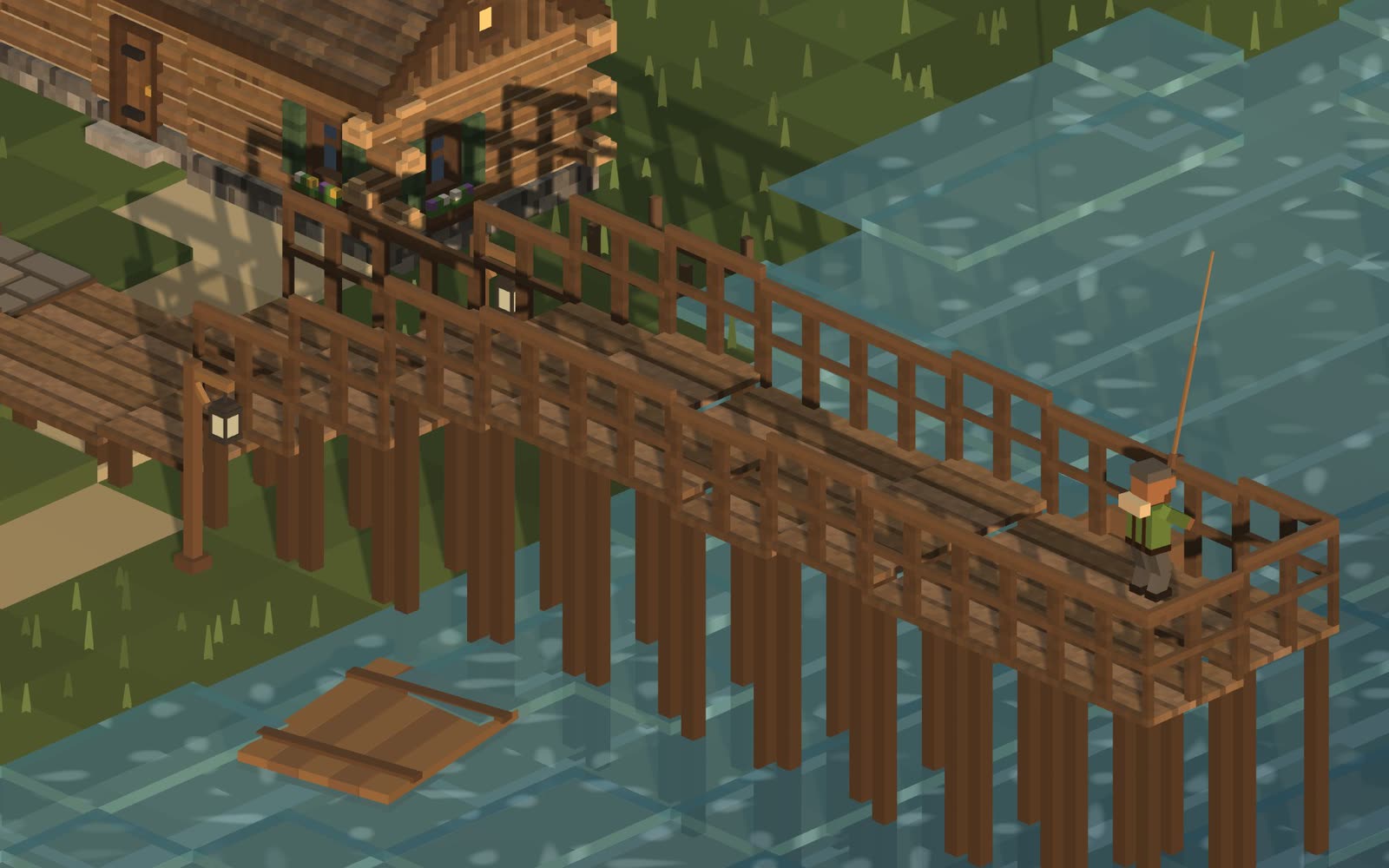
A settler fishing off the end of the pier in the afternoon, a raft tied up below and a sailboat nearby

Fishing, from the creek to the open sea

There are seventeen different things to catch, lobster included, and where you cast decides what bites. Perch and brook trout in the creeks and lakes, pike and sturgeon in the deeper water, then cod, halibut and bluefin tuna out at sea. A big fish feeds a lot of people, and if you go far enough out there's something rarer than any of them. In winter you chop a hole in the lake ice and fish through that.

WhyEvery good camp needs someone who sits on the dock with a rod. And every good camp argues about who caught the biggest one, which is why the Lantern keeps track.

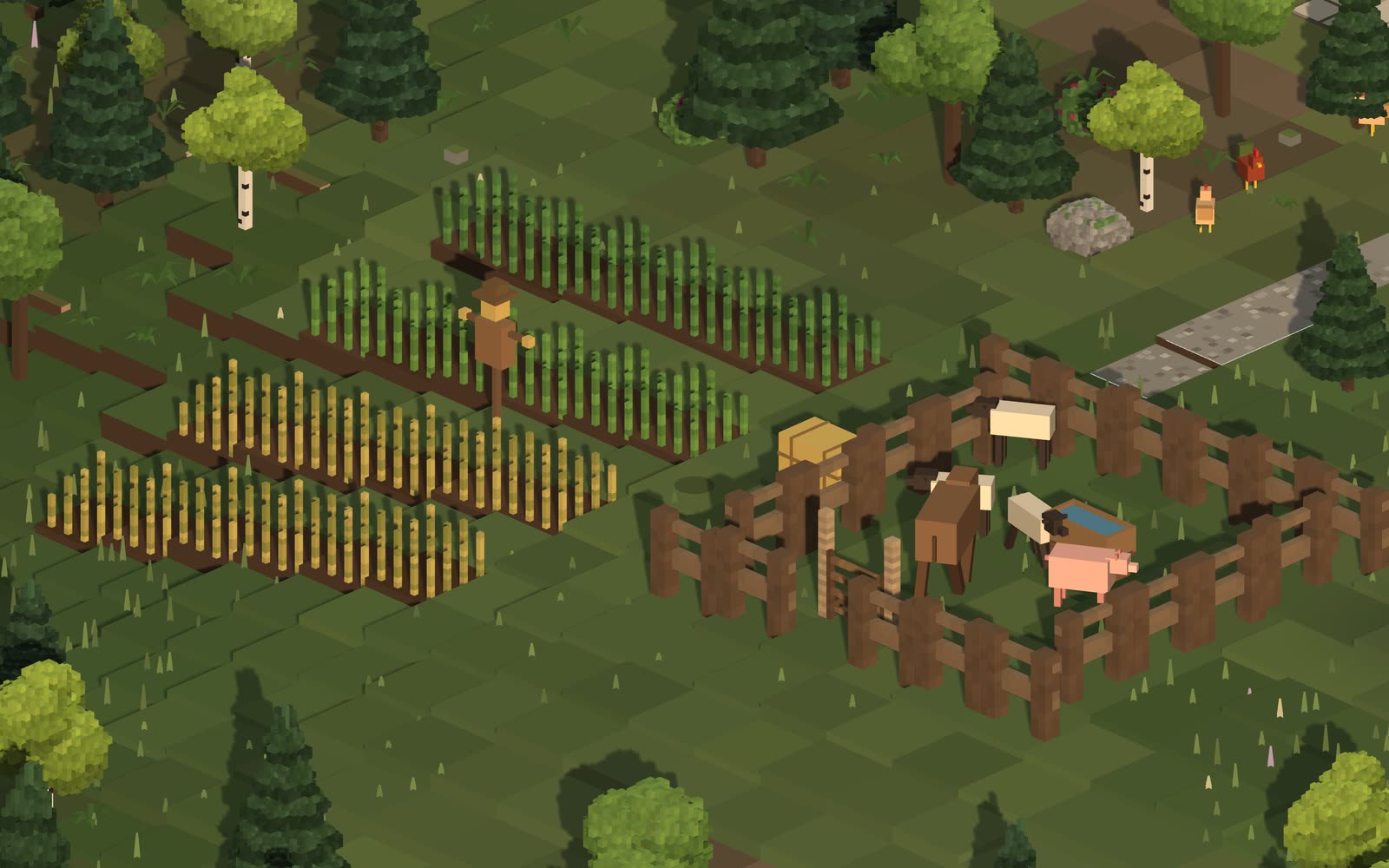
A settler harvesting potatoes beside rows of carrots and wheat, a scarecrow, and sheep, a cow and a pig in a pen, with the woods all round

A farm, a kitchen and a full belly

Grow potatoes, carrots and wheat. Keep chickens, sheep, cattle and pigs for eggs, wool, milk and meat. Then cook: shepherd's pie, pancakes, bacon and eggs, meat stew, smoked fish and jerky for the road. You do need to eat and drink, and a cooked meal does you a lot more good than something raw. Nothing grows in a frost, so what you put by in the fall has to see you through.

WhySomebody has to feed the person who spent all day digging the canal. I wanted farming to be a real way to play, not a chore everyone has to do.

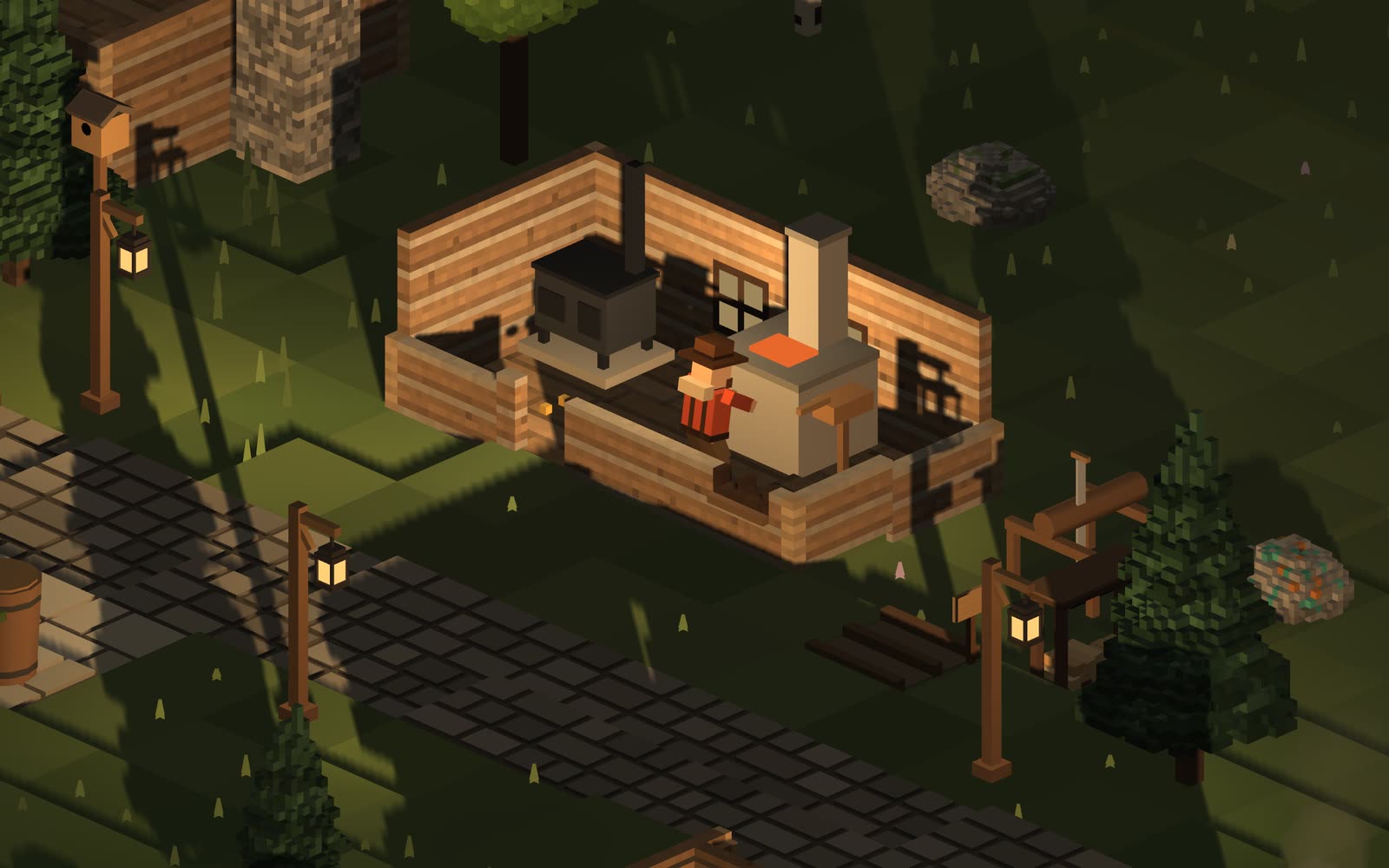
A smith at work at the forge inside a log workshop at dusk, the near walls cut away, a stove in the corner and a saw pit out the side

Smelt and smith

Bring the ore up and smelt it at a forge you built yourself, then make tools, swords, axles, a cookstove, an iron plough. Pan gold out of the creek gravel and refine it, then spend it or work it into a ring or a locket.

WhyGold and rich seams don't go on any map. Whoever finds one gets to decide whether to tell anyone, and I like that a good find can stay a secret.

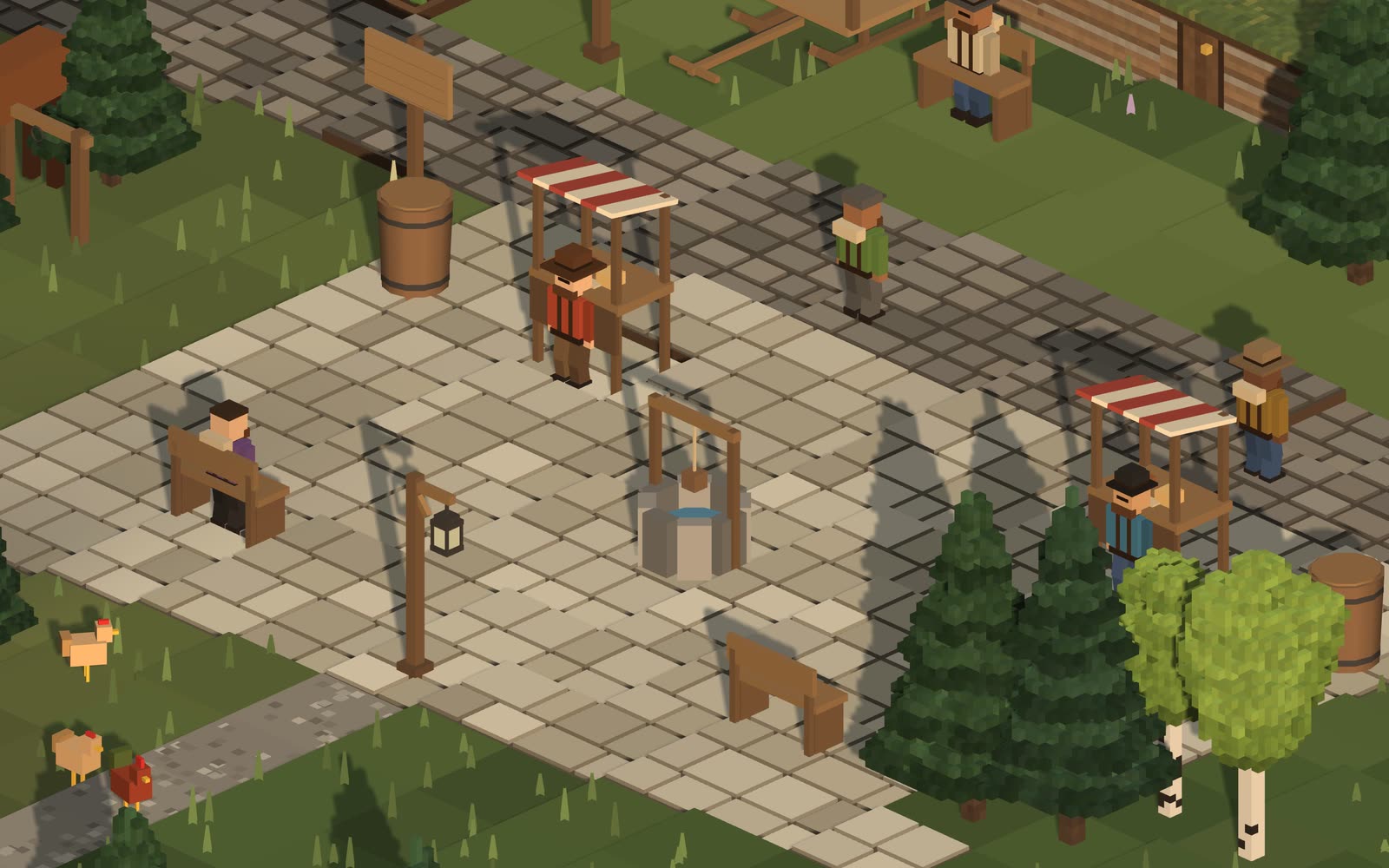
Two market stalls on the square with their keepers behind them, a well, and neighbours stopping by

Trade, settle and talk

Sell what you make at a market stall, which keeps selling while you're away, or trade face to face where you both put something in and both agree. Stake a claim, name your settlement and it goes on the Atlas. Trust your friends with your horse, your cart and your land, add them to your friends list, and send them a message that waits for them if they're away. Voice chat carries by distance, so you hear the people standing near you, the way you would around a real fire.

WhyThe best stories are always between people. The blacksmith down the road, the fellow who sells you fish, the deal you made over the fire. The game itself never buys anything and never pays anyone. Gold only comes out of the ground, so every coin at a stall was dug up and refined by somebody.

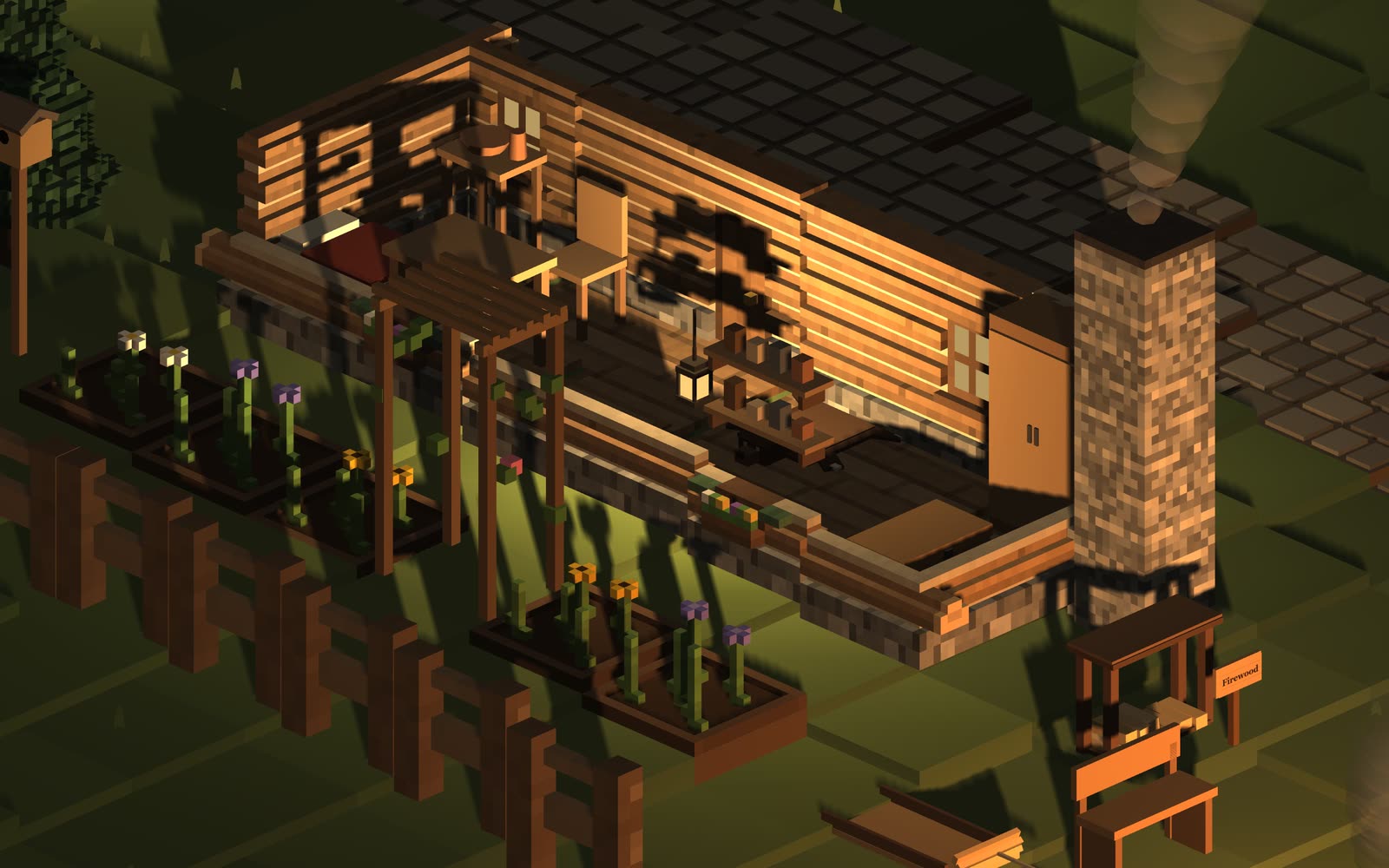
Inside a furnished cottage at dusk, the near walls cut down so you can see the bed, the table, a lamp and the shelves, with a garden and an arbour out front

A place of your own inside

Once the walls are up you fill it in: a bed, a table and chairs, a washstand, shelves, a rug by the stove. Keep your things in a chest or a cupboard, dry goods in a crate out in the yard, milk and syrup in a crock, and anything you really care about in an iron strongbox that only opens for you. When you step inside, the walls between you and the view drop down so you can see the room, and the windows glow at night when there's a fire, a stove or a lantern lit inside, so you can tell who's home.

WhyA cabin should feel lived in, not just look good from the road. And a lit window down the street is a nice thing to see on the way home.

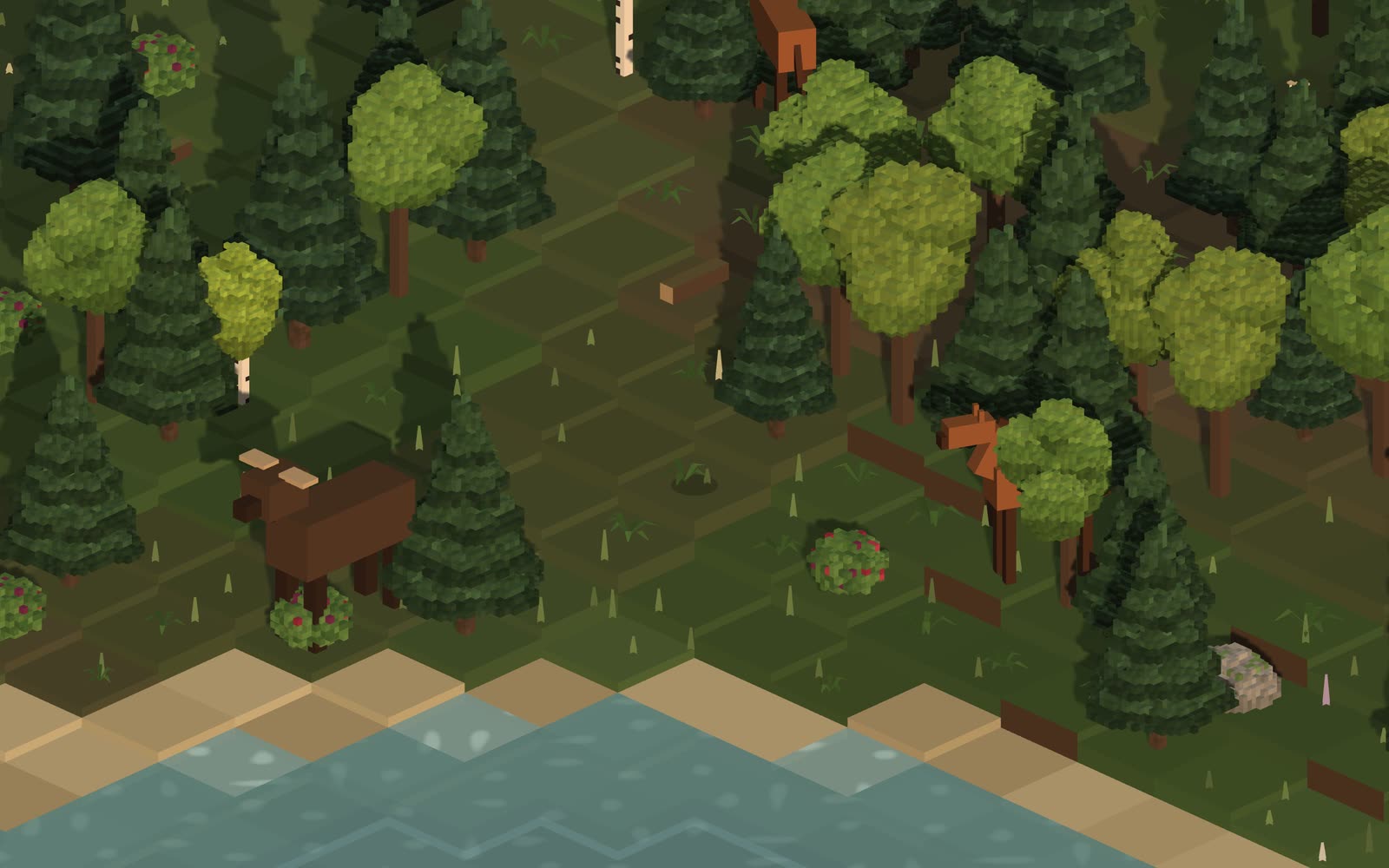
A bull moose at the edge of the lake in mixed woods of spruce and birch, a wild horse in the trees behind

Wild country

There are thousands of animals across the map, each kind where it likes to be. Deer and hares are good eating, a beaver works the creeks, and a grouse goes up out of the bushes. Wolves, bears, boar and a moose in the rut are another matter. They growl before they charge, so you get a moment to back off, and there's an old grizzled bear out there that's best left alone.

WhyGoing out past the last cabin should feel like something. I wanted the woods to be beautiful and a little bit dangerous, so a bow, a lantern and a friend along are worth having.

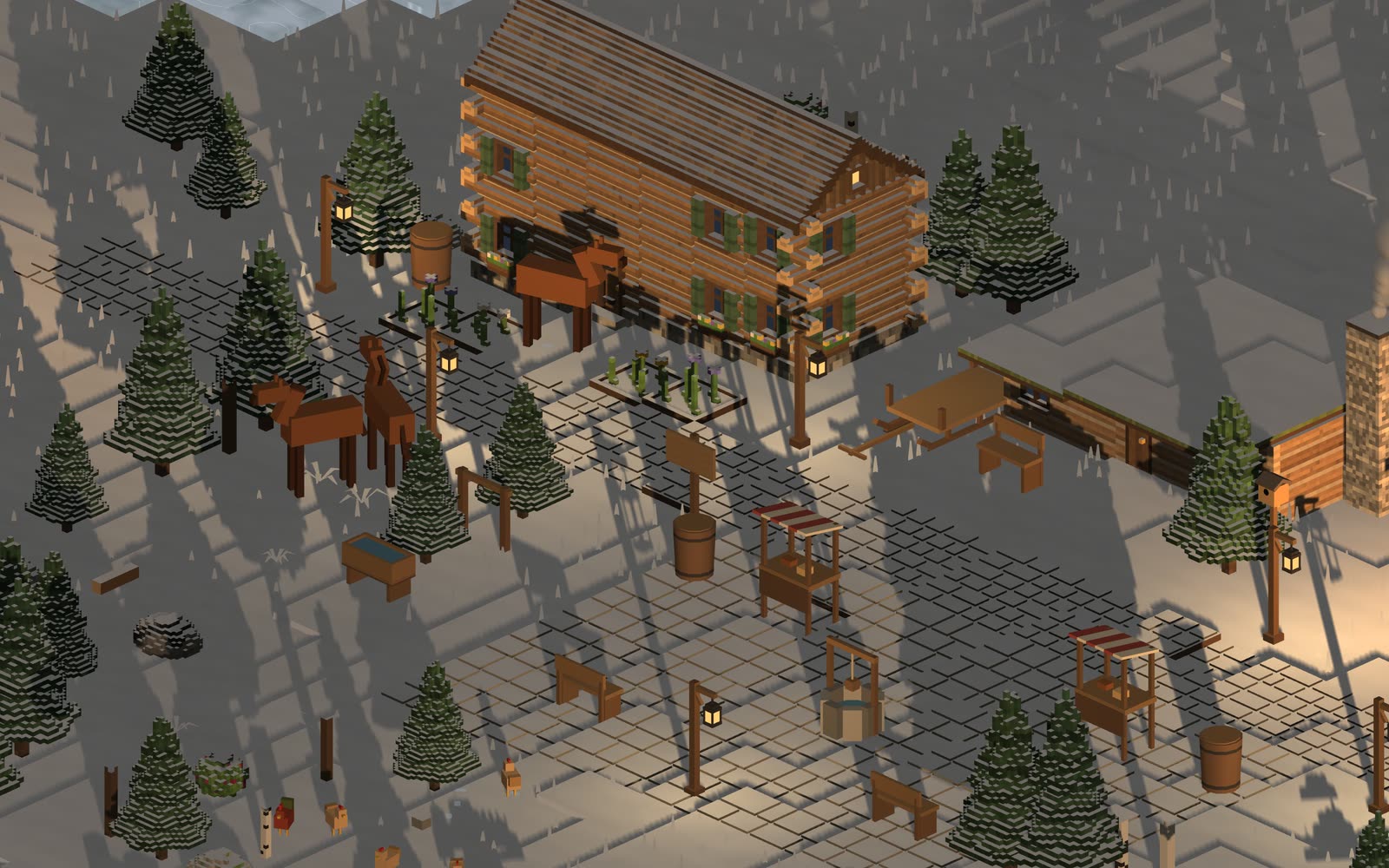
The settlement on a winter afternoon, snow on the roofs and the square, the lake frozen behind, horses at the rail and the street lamps lit

Get ready for winter

Once a year the snow comes. Split your logs into firewood and stack it at a woodpile, and a stove beside the pile feeds itself. Put food down in a root cellar, cut hay before the snow covers the grass, and make yourself a hide coat, or better, furs. When the lakes freeze you can walk out on them, cut ice for an icehouse, and haul logs on a sled over the snow. Thin grey ice can let you through, and the cold can leave you numb, but it never takes your health.

A good woodpile sees a cabin through the winter, and it doesn't take a whole season of chopping to fill. Hide gear will do for a short trip out on a cold day, and full furs see you through, unless a blizzard gets in.

WhyWinter gives the year a shape and gives neighbours a reason to look in on each other. You can share a woodpile with everyone, the way an honour-box stand works, and if you top up someone's pile or shovel their path, they hear about it. A newcomer who turns up in the cold is lent a coat and snowshoes, and the camp keeps a pot of stew on, so nobody starts out frozen.

Under the hillsMines, tunnels and caves

The ground under Thole goes down a long way, and what's in it follows the land above. Coal and ironstone lie under the low country, lead and limestone along the flanks of the hills, and copper and gold in the veins of the high granite, more gold the deeper you go.

Prospect the rocks to see what's there, then go after it. With a pick you can tunnel straight into a hillside and walk back out into the daylight, and once you're a better miner you can sink a shaft, put in ladders and work down level by level. Hard rock stands on its own, but soft ground over a wide span will creak and come down unless you set timbers. Cut a tunnel through to a lake or the sea and the water comes in after you.

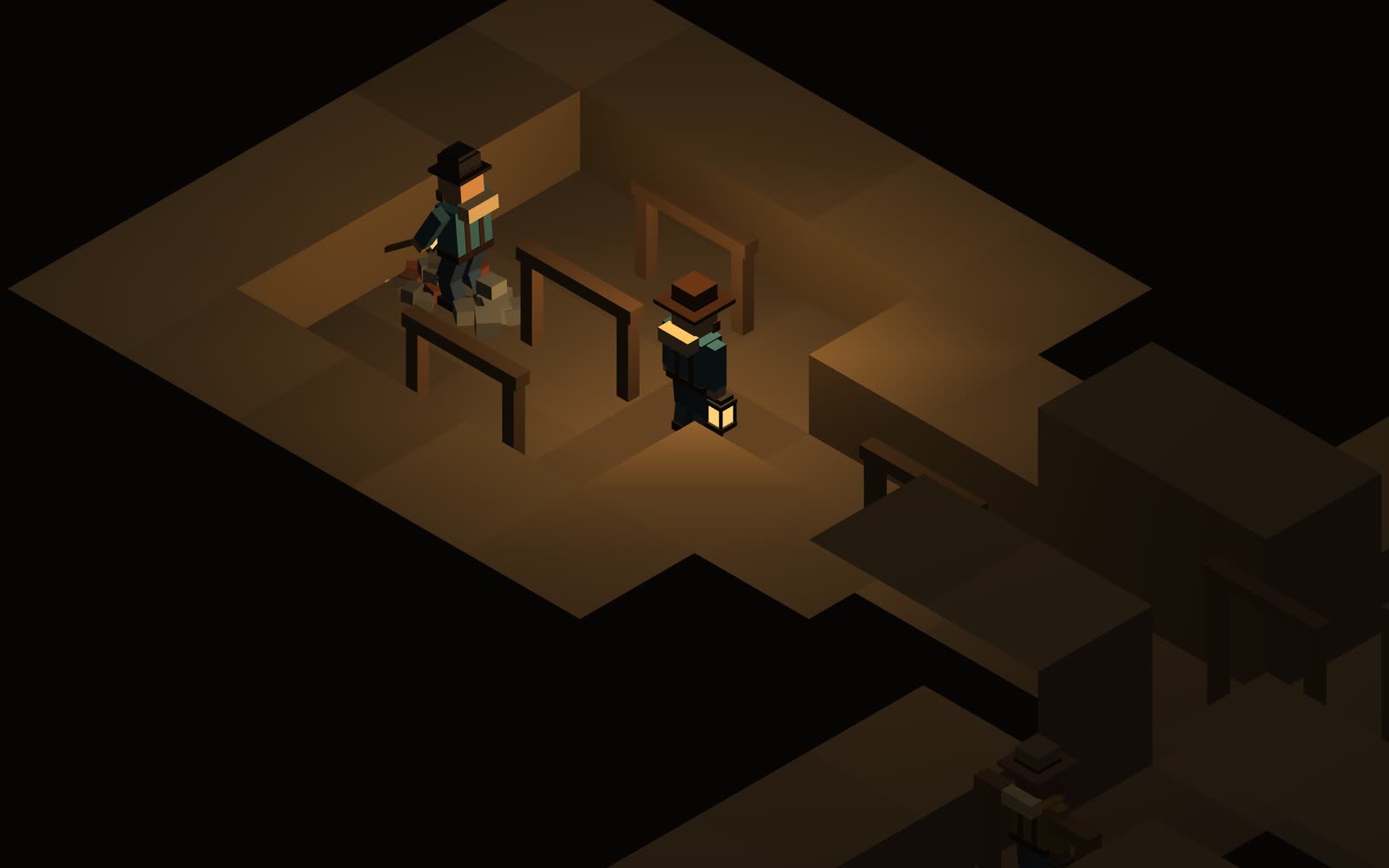
A miner with a pick at the face of a timbered gallery underground, beside a pile of ore, lit by another settler's lantern
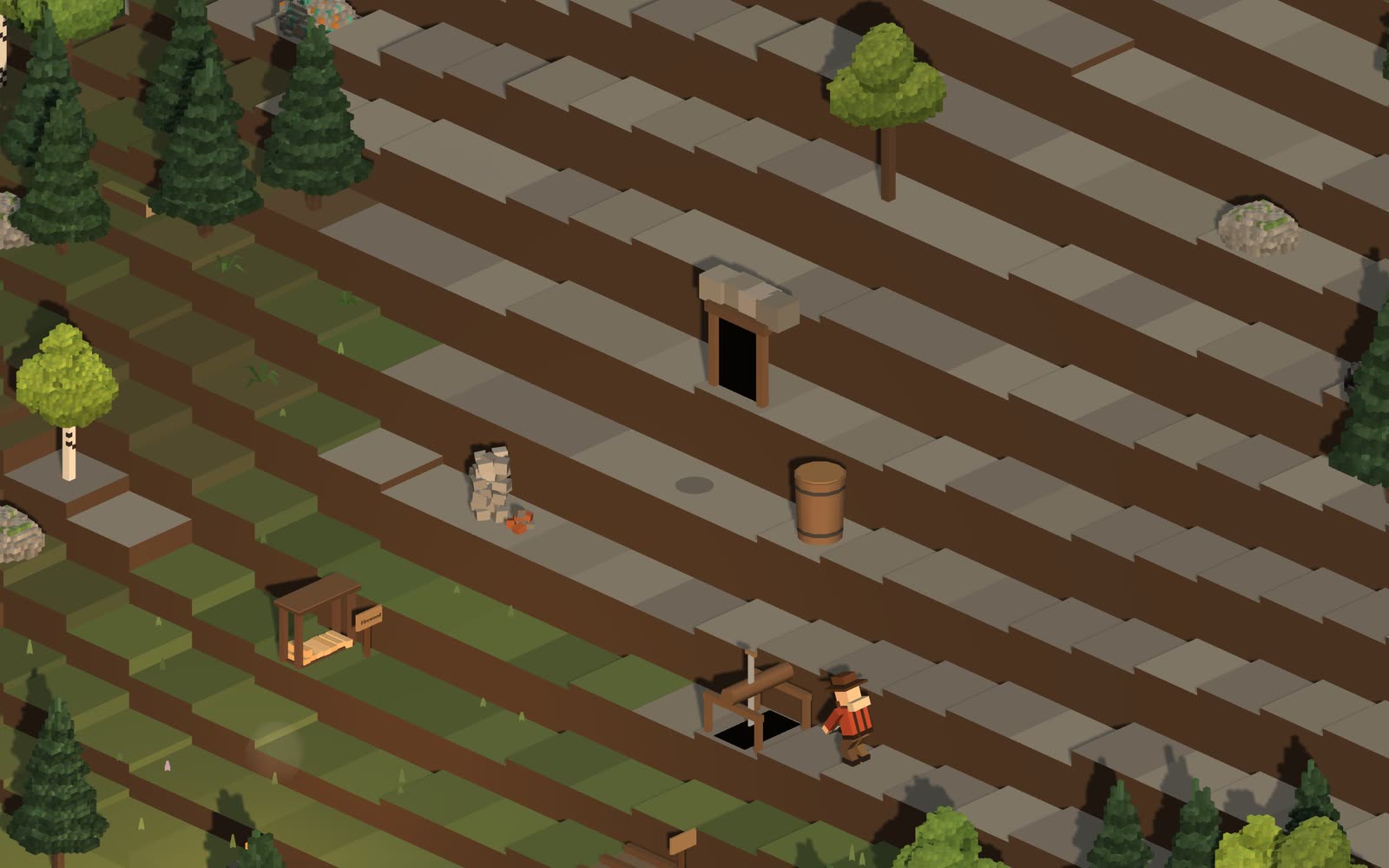
The timbered mouth of an adit in a rocky hillside, a stone pile, a lumber rack and a saw pit in the yard below, someone sawing timber
The mouth of an adit, with the yard below where the timbers are cut.
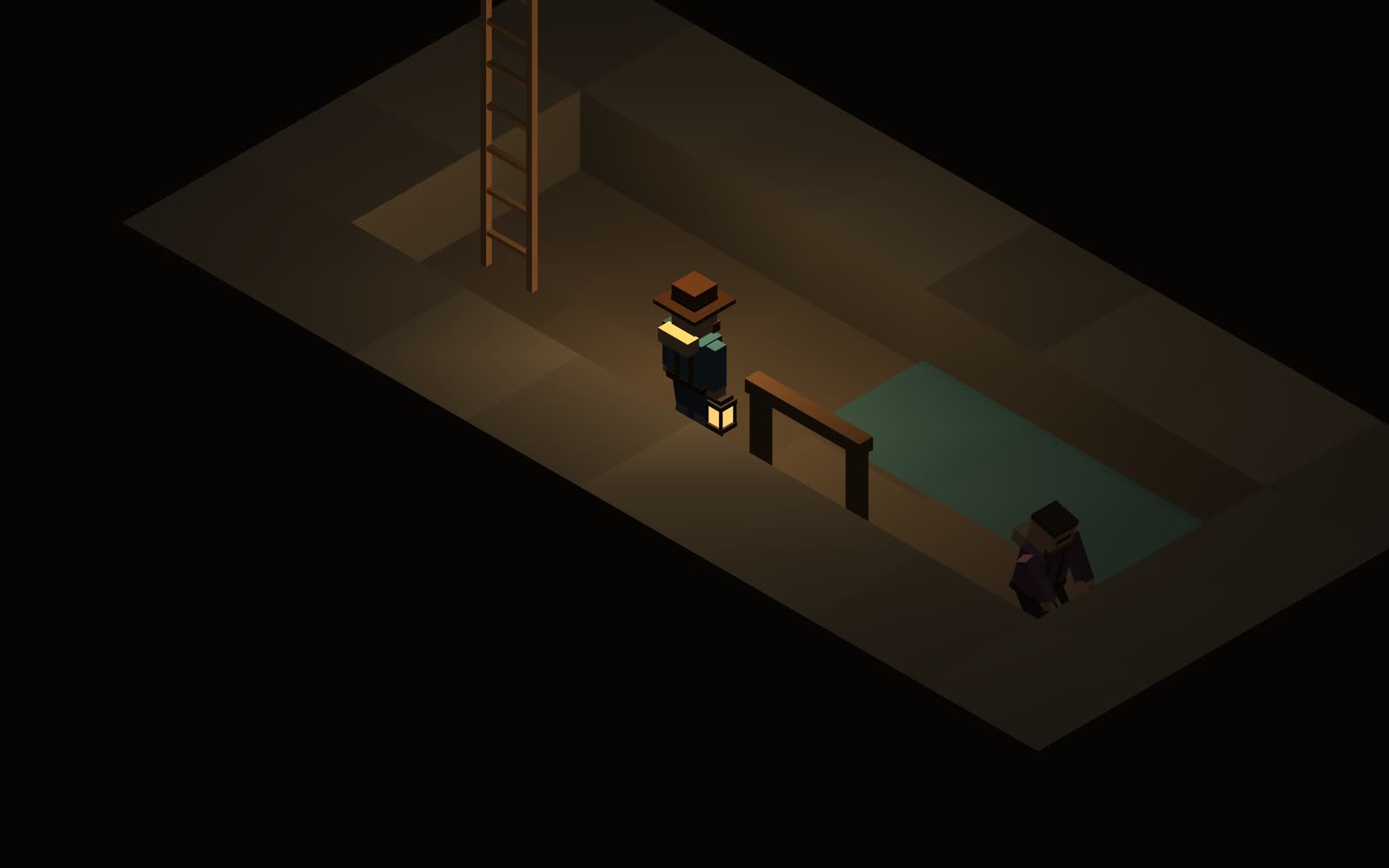
A ladder coming down into a lower level where water stands in the low end, a miner working beside it by lantern light
A ladder down to the level below, where the water has found its way in.
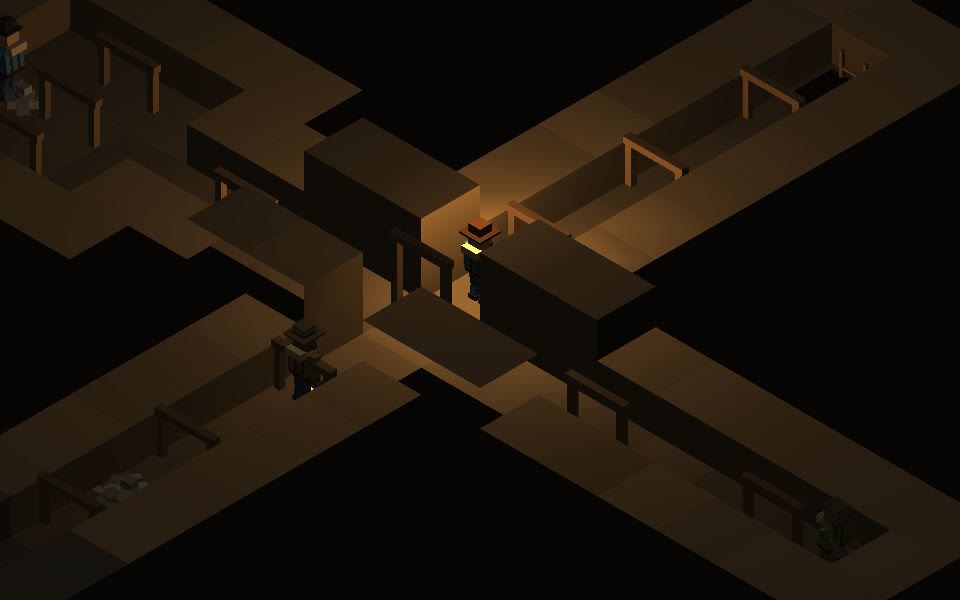
Two timbered galleries crossing underground, lit by one settler's lantern, with miners at work at the far ends
Where two galleries cross. Down there the only light is the lantern you bring.

There are real caves out there too, in the limestone along the hills and in the cliffs by the sea. They're dark until somebody brings a light in, and what's been left in them is for whoever finds it first.

Your name in the woodsThe world keeps a record

Thole keeps track of what people do. The Lantern is the paper of the north woods. It prints the news, keeps the all-time records, and lists every first in the order it happened. A first can only happen once, so whoever gets there first is in the paper for good. It keeps the almanac too: when the first frost is due, when the lakes should freeze and when the sap will run. A little lantern by the clock in the game lets you know a day or so ahead.

The Lantern ยท Records

The best anyone has done, for all time. Records never reset. All the records

  • Biggest fishStill open
  • Deepest undergroundStill open
  • Longest voyageStill open
  • Most experience in one dayErika, 1,189 xp
  • Most trees felledErika, 11
  • Furthest walkedMr.Joe, 2 km
  • Most fish landedStill open
The camp A landmark
The Atlas fills in as people explore. It marks the day each stretch of country was first seen and who saw it. Drag back to Day 1 and watch the map grow.

The Atlas

The first time anyone gets close to a stretch of country, it goes on the map with the day and their name. Landmarks and named settlements go on it too, so over time the map tells the story of who went where.

Your own page

Every settler has a page with their record: trees felled, fish landed, kilometres walked, sailed and rowed, firewood split, things given to others, neighbours helped through the cold, and every first they've taken.

The week's best hands

Each week the Lantern prints who worked hardest in every skill. The news is held back a while, so a headline never gives away where somebody is standing.

SkillsGet better at what you do

There are thirteen skills, and you get better at each one by doing it. Something new opens up every couple of levels, like a better tool, a new recipe or a bigger build, so there's usually a next thing within reach.

Work takes real seconds and gets quicker as you improve. Heavy work and hauling build your Strength, which lets you carry more. Nobody has to do everything, and a camp where one person farms, one smiths and one fishes gets on a lot better than four people doing all of it badly.

WoodcuttingMiningDiggingBuildingFarmingCookingCraftingSmithingFishingHusbandryMeleeArcheryStrength
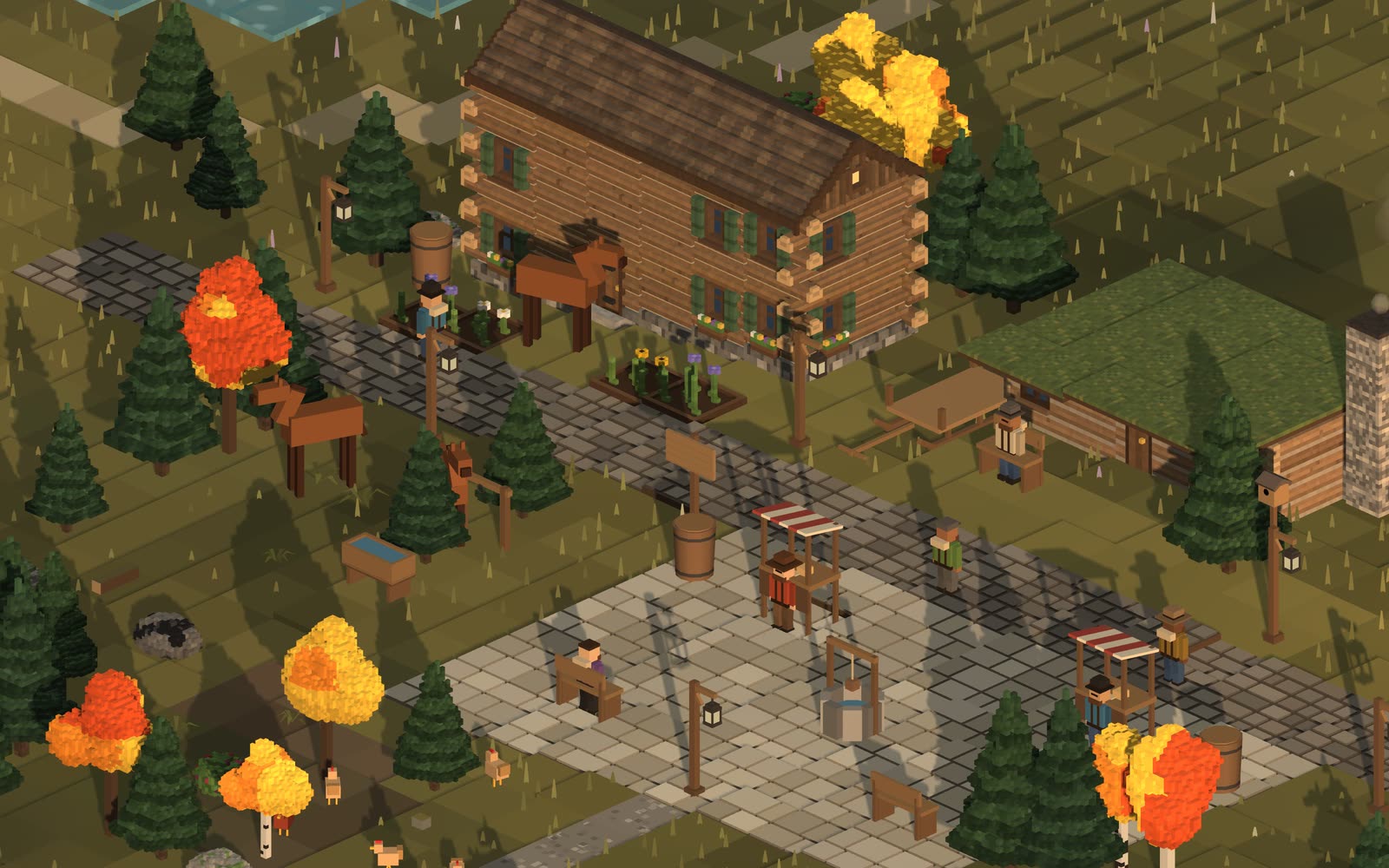
The street in autumn, the birches turned orange and gold among the spruce

Where it's atEarly, and I'm working on it most days

Thole is still being built, and I'm not going to pretend otherwise. Some things are rough and some things are missing. I add to it most days and write up what changed in the Lantern, and what people tell me has a lot to do with what I work on next.

It's made by one person on Prince Edward Island, and it's meant for groups of friends more than crowds of strangers. I'd like it to be a decent place to spend an evening, where people help a newcomer find clay, lend a horse, and trade fair. Slurs are kept out of chat, there's a short code of conduct, and you can report a player right from the game. If that sounds like your kind of thing, you'll fit right in.

If something's broken, please tell me. There's a line in the game's menu for it, and I'd honestly rather hear about it.

Do I need to download anything?
No. It runs in your browser on a computer, a phone or a tablet, and it plays the same on all of them. Tap or click to move and work, and hold or right-click for everything else.
Does it cost anything?
No. And nothing you can buy will ever make you stronger than someone who just plays.
Does the world get reset?
That's not the plan. The world is the save file. While it's this early I may have to start it over now and then, and I'll say so in the Lantern ahead of time. Your name stays with your account when that happens.
Can I play with my friends?
That's really the point. Once you're in, the settings give you a link to send them, and if you're online when they join they'll start right beside you. Add each other as friends and you can send messages wherever you both are.
Can anyone sign up?
While it's early, sign-up needs an invite code or a link from someone who's already playing, so the first settlers will mostly be friends of friends. If you'd like a code, get in touch.
What if I start in the middle of winter?
You'll be lent a coat and snowshoes, the camp keeps a pot of stew on by the fire, and nothing hunts near the camp, so you can find your feet before you head out. Selling firewood to the people who need it is a good way to get going.
Is there fighting?
Wolves, bears, boar, a moose in a bad mood, and the hunt. You start with your fists, whittle a wooden sword, and work up to iron and a good bow.

Come out to the fire

Make an account, pick a name and a shirt, and you'll start at the camp by the lake, whatever the season. Bring a friend or two if you can. The woods are a lot friendlier with company.

Free, no download, and it works on your phone.